
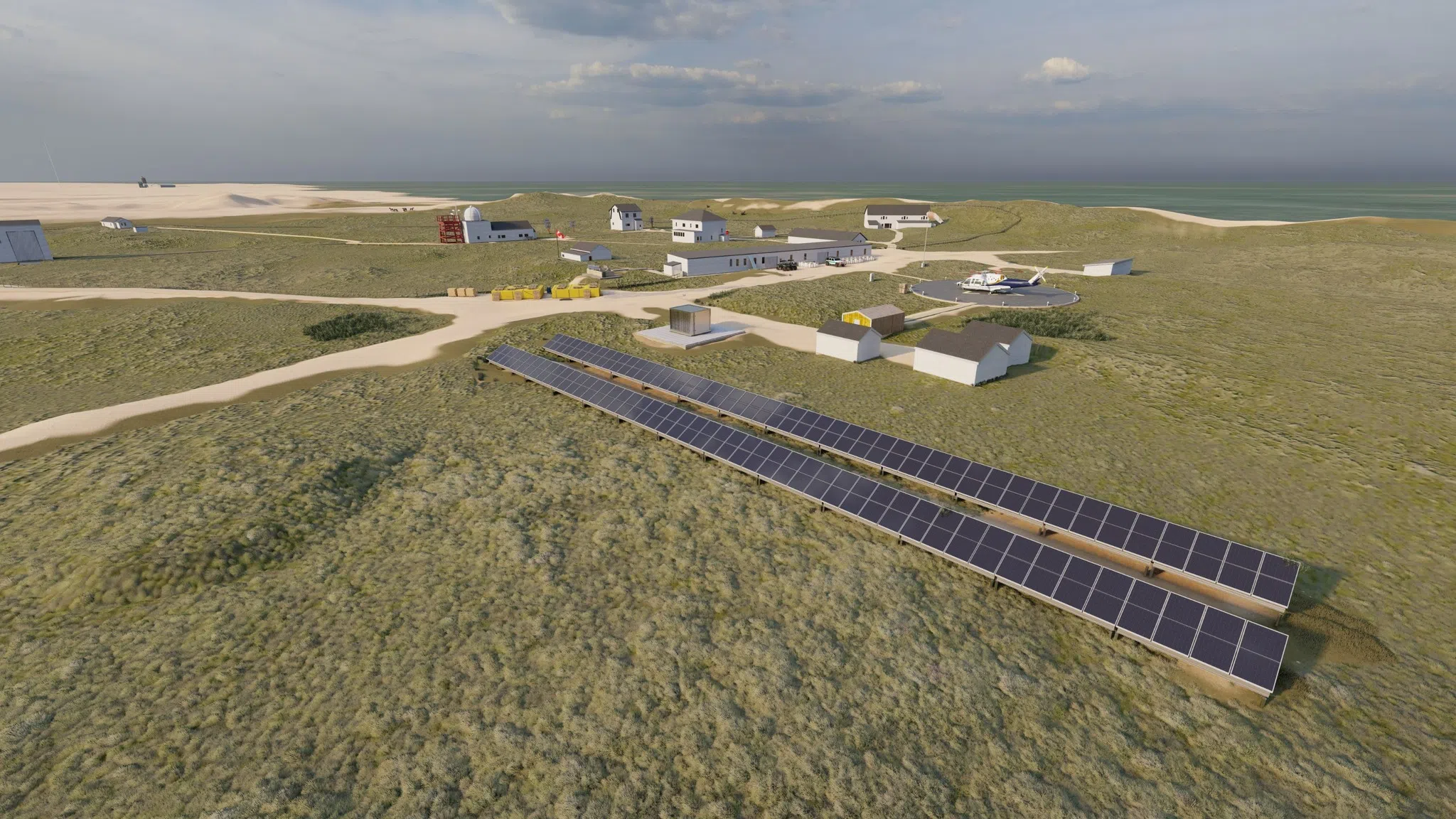
A rendering of planned solar upgrades on Sable Island. Parks Canada.
Sable Island is going green, with the federal government spending $5.1 million to significantly reduce the use of fossil fuels at Sable Island National Park Reserve.
The funding will support energy-efficiency upgrades in key buildings and the modernization of the island’s power generation system into a sustainable micro-grid. Parks Canada says the changes are expected to cut fossil fuel use on the remote island by more than 50 percent.
The announcement was made Tuesday in Halifax by federal representatives on behalf of Environment, Climate Change and Nature Minister Julie Dabrusin.
Parks Canada says the project is designed to reduce electrical energy consumption while improving reliability in one of the country’s most isolated national parks. Sable Island is known for its rolling sand dunes, wild horse population, and the world’s largest breeding colony of grey seals, along with several other unique species.
The upgrade is being funded through Parks Canada’s infrastructure investment program and the federal Greening Government Fund. Officials say the project will serve as a model for other remote, off-grid sites managed by Parks Canada and other federal departments.
Similar work has already taken place elsewhere in Nova Scotia. In 2022, a large solar installation was added at Jeremy’s Bay Campground in Kejimkujik National Park, generating hundreds of megawatt-hours of renewable electricity and significantly reducing carbon dioxide emissions.
By lowering energy costs and reducing reliance on diesel and other fossil fuels, Parks Canada says more resources can be directed toward conservation and protecting the island’s natural and cultural heritage.
The investment also supports the federal government’s broader goal of reducing greenhouse gas emissions and reaching net-zero operations by 2050.



