

Canadian scientists have found that the ocean floor is on the move.
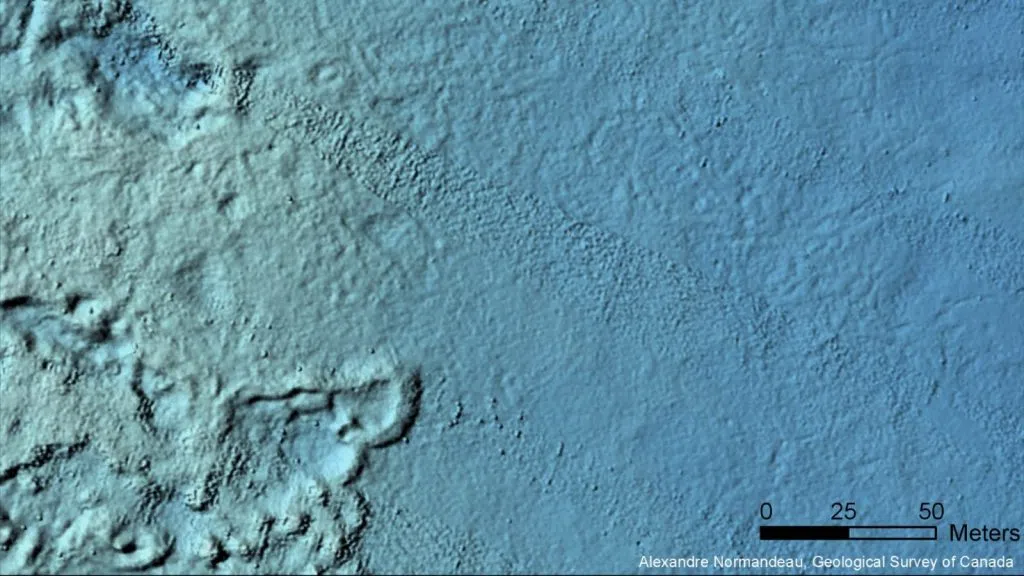
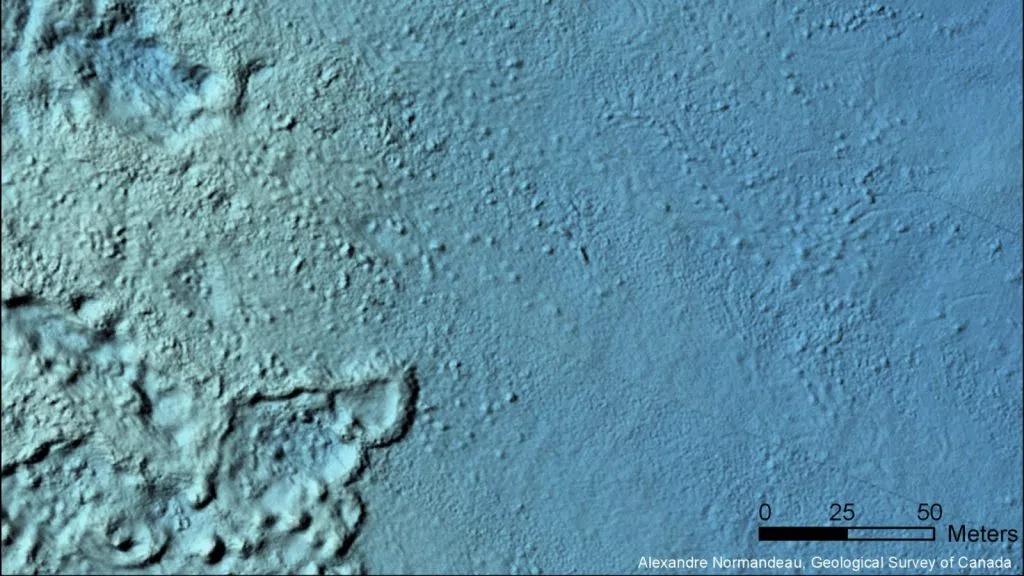
In Webb’s Bay, Nunatsiavut, the seabed swells in winter and settles in summer, creating frost blisters as wide as a car and about a foot tall.
Dr. Audrey Limoges, an associate professor of earth sciences at the University of New Brunswick, said the findings show the seabed is not static.
“Our study shows that it can actually change over time even at a seasonal scale, which is very rapid,” she said.
Limoges explained that frost blisters form when freshwater in the sediments freezes and expands, then disappear when the ice thaws.
She compared the process to the way an ice cube grows as it freezes.
The changes could have practical consequences. Limoges said shifting sediments may affect submarine cables and offshore energy projects in Atlantic Canada.
“Shifting movements of the sediment could affect their stability,” she said.
Researchers also noted possible impacts on benthic organisms and microbes in the seabed, though those effects were not measured in this study.
Limoges said future work will look at how seasonal shifts may influence marine life.
The team observed the frost blisters only in Webb’s Bay, but Limoges said similar processes may occur in other regions where freshwater seeps into the seabed and mixes with cold ocean currents.
Dr. Alexandre Normandeau, a research scientist with Natural Resources Canada and adjunct professor at UNB and Dalhousie, compared the process to potholes forming on land during freeze and thaw cycles.
The discovery was unexpected. Limoges said the team first noticed unusual patterns while mapping the bay for other purposes, which led to years of investigation and collaboration with the Nunatsiavut Government and the community of Nain.
The project involved Natural Resources Canada, UNB, Dalhousie University, Memorial University, Queen’s University and the Nunatsiavut Government.
It was funded by Natural Resources Canada’s Marine Geoscience for Marine Spatial Planning program and a Natural Sciences and Engineering Research Council of Canada ship‑time grant to UNB.


