
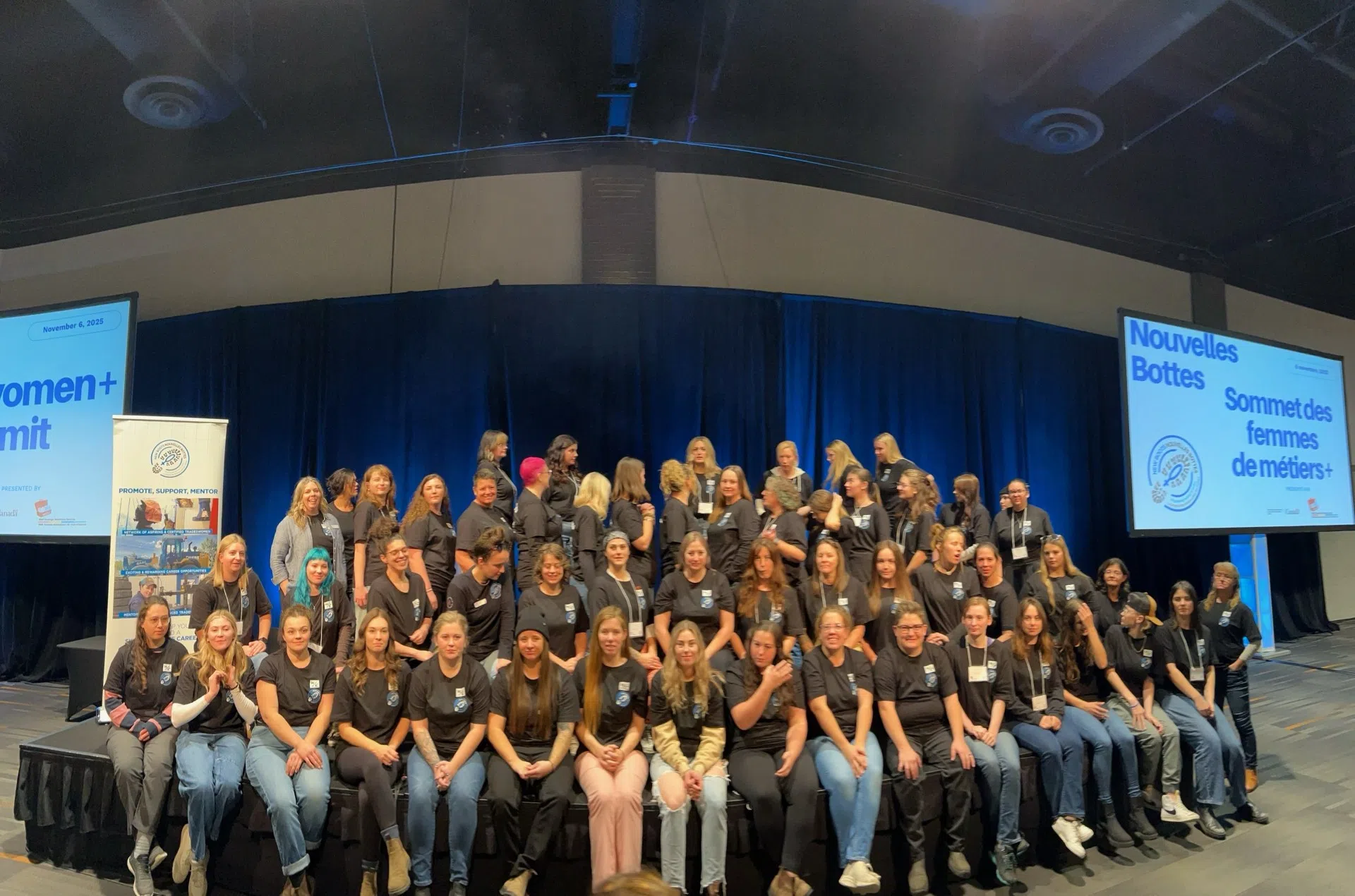
A summit in Saint John brought together more than 70 tradeswomen to focus on support, retention and empowerment in the skilled trades.
The event was held on November 6 at the Saint John Trade and Convention Centre.
It was hosted by New Boots Progressive Women Plus Network, part of Map Strategic Workforce Services.
Executive director Hélène Savoie‑Louis said the network spent the past decade promoting trades to girls and women and is now focusing on keeping them in the sector.
“We’re still very low in the number of tradeswomen in the apprenticeship system in the skilled trade sector,” Savoie‑Louis said. “And we still see some of the main barriers are the same from 10, 15, 20, 25 years ago.”
She said women represented fewer than two per cent of apprentices in 2014 and now hover around seven to eight per cent.
She said the summit responds to research that included surveys, interviews and focus groups with tradeswomen.
Organizers said this year’s summit was the first limited to registered apprentices, NBCC and CCNB students, and journeypersons.
All speakers were women, and there were no employers or HR personnel in the room, making the event a space focused solely on tradeswomen.
Programming covered workplace rights with a lawyer, branding and self‑promotion for career advancement, and a panel of New Brunswick tradeswomen who moved into leadership.
The panel featured roles such as a foreperson, NBCC chair of construction, planner/coordinator and trade trainer.
Savoie‑Louis said trades should be promoted as gender‑neutral career paths open to women, Indigenous people, newcomers and 2SLGBTQ+ communities.
She added that diversifying male‑dominated sectors like trades should be matched by diversity efforts in female‑dominated fields such as health care.
She said trades are often misunderstood as fallback options, when an apprenticeship is a structured educational pathway leading to Red Seal certification.
She said the work demands problem‑solving, communication and teamwork and offers competitive salaries.
Savoie‑Louis noted that technology may reduce demand in some roles, such as machinists, but essential trades will remain.
“You’ll always need a carpenter,” she said, adding that “there’s never going to be a robot building your house.”
She said trades underpin daily life, from arenas and hospitals to grocery stores and offices.
“You cannot be what you cannot see,” she said, encouraging participants to mentor the next generation.
The summit surpassed its original target of 50 participants, with more than 70 women attending from Edmundston, Bathurst, Moncton, Fredericton, Saint John and smaller communities.
Organizers said supports were offered for childcare, travel and wage compensation.
Savoie‑Louis also highlighted the Skill Trades Exploration Program, or STEP, a free 8–16‑week training initiative run in partnership with the province.
She said the program offers entry‑level training in trades such as carpentry, electrical, insulation and boilermaking and works with WorkingNB on funding to help people re‑enter the trades.


