
The federal government is projecting a $78.3‑billion deficit in its 2025-26 budget, nearly double what was forecast less than a year ago.
Prime Minister Mark Carney’s first budget, titled “Canada Strong”, was tabled Tuesday and includes billions in new spending on housing, defence, infrastructure and productivity.
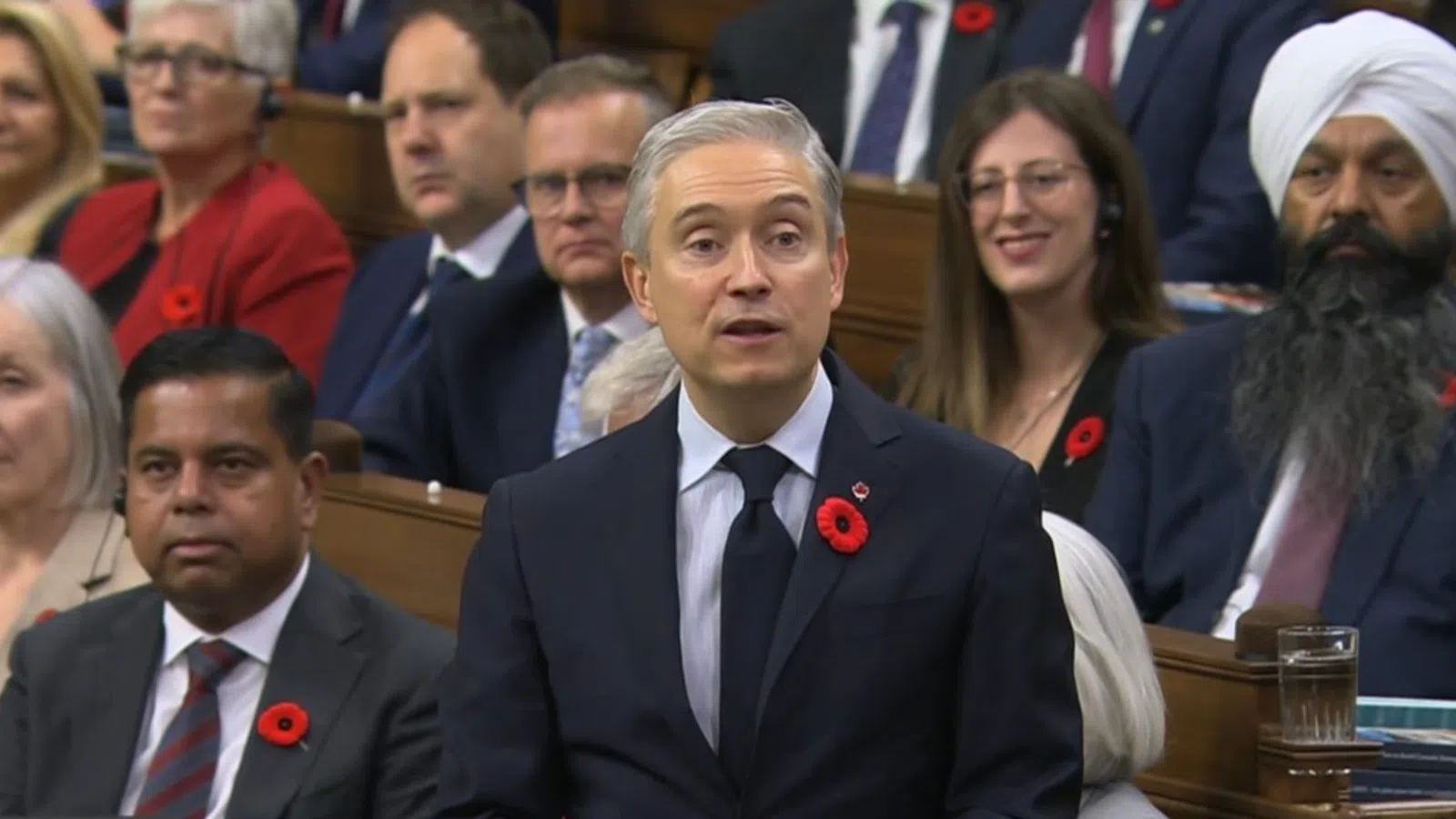
Finance Minister François‑Philippe Champagne told the House of Commons the budget comes at “a time of profound change” and said the government chose to spend on the country’s future rather than cut programs.
“Balancing the budget this year would mean eliminating vital social programs and the capital investments needed for Canada’s future,” he said.
On the same day, Nova Scotia MP Chris d’Entremont crossed the floor from the Conservatives to the Liberals, leaving Carney just two seats shy of a majority government.
Affordability and housing
Champagne said affordability measures are aimed at making life easier for Canadians, pointing to tax cuts for 22 million people, lower gas prices through changes to the carbon price, and the permanent national school food program.
He also highlighted automatic federal benefits for 5.5 million low‑income Canadians and promised stronger competition in telecommunications and banking to reduce costs.
On housing, Champagne said the government’s plan is intended to make home ownership more attainable for young people.
“Every home built is a step toward a more affordable and a more confident Canada,” he said.
Defence and security
The budget sets aside $30 billion over five years for defence, which Champagne said is the largest such plan in decades.
He said Canada will meet NATO’s two per cent target this year, modernize NORAD, and strengthen Arctic defence.
“We will equip our brave men and women of the Canadian Armed Forces with the infrastructure and technology that they need to safeguard our nation,” Champagne said.
Infrastructure and capital spending
The government is committing $115 billion over five years for infrastructure, including health facilities for the first time. Overall, the budget outlines $280 billion in capital spending over five years.
Champagne said the plan is expected to “unlock $1 trillion in total investment” when combined with contributions from provinces, municipalities, Indigenous communities and the private sector.
He said that could boost average wages by about $3,000 a year and add $15 billion in federal revenues.
Trade and economic measures
The budget includes a trade diversification strategy aimed at reducing reliance on a single partner and doubling overseas exports within a decade.
Champagne said the plan will strengthen ports, railways and border infrastructure to open faster routes to global markets.
He added that Canada will continue to attract international talent, with $1.7 billion set aside for a new strategy to bring skilled workers and researchers to the country.
Champagne also promised new training measures, including extending union training programs, tax credits for personal support workers, and a labour mobility program.
He said 50,000 workers will benefit from a retraining initiative tied to tariff relief.
“Workers will always be at the heart of our economic strategy,” he said.
The budget also outlines new tax credits for clean energy projects, carbon capture and hydrogen, which Champagne said are meant to support Canada’s transition to a low‑emission economy.
Fiscal framework
The government is introducing a capital budgeting framework that separates day‑to‑day spending from long‑term projects.
It also sets out $60 billion in savings over five years through reduced operating costs, largely by shrinking the federal public service through attrition.
Champagne said Canada’s fiscal position — with the lowest net debt‑to‑GDP ratio in the G7 — allows Ottawa to make long‑term spending commitments while protecting programs such as child care, dental care and pharmacare.
Opposition reaction
Conservative Leader Pierre Poilievre called the budget “the most costly deficit in the history of our country outside of COVID.”
He said the government’s plan will drive up the cost of food, housing and other essentials.
“Every dollar the Prime Minister spends comes out of the pockets of Canadians. The more they spend, the more things cost,” Poilievre told the Commons.
He accused the Liberals of breaking promises made just months ago, pointing to a larger‑than‑expected deficit and a higher debt‑to‑GDP ratio.
Poilievre said the budget forces Canadians to spend more on debt interest than on health care transfers and argued it will leave families worse off.
The Conservative leader said his party will propose an amendment to “make Canada affordable” by eliminating the carbon tax, cutting what he called wasteful spending, and clearing red tape to speed up home construction.
Bloc Québécois MPs questioned the government’s climate commitments, while the NDP raised concerns about planned reductions in the federal public service.
Champagne said most of the cuts would come through attrition and insisted the government values the work of public servants.
With the Liberals holding a minority in the House of Commons, the budget will serve as a key political test in the days ahead.


