
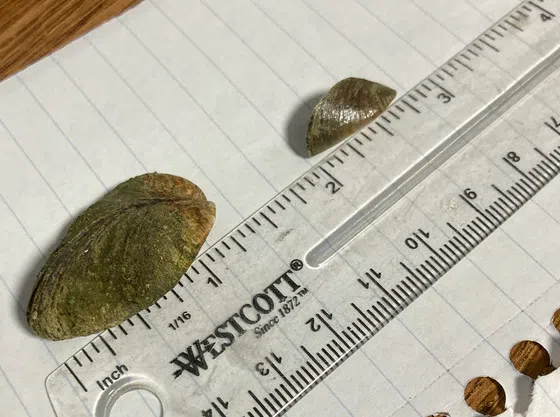
Three Minnesota lakes along the Canada-U.S. border have been identified with the presence of zebra mussel larvae known as veligers.
They were in water samples taken from Lake Kabetogama, Crane Lake and Namakan Lake.
All three lakes flow into Rainy Lake, where a similar discovery was made on the Minnesota side in 2021.
The state’s Department of Natural Resources says no adults were found, but the presence of the larvae suggests reproducing populations exist.
All three lakes are now listed as being infested.
Sand Point Lake, connected to Namakan by a wide channel, is also being listed.
The DNR says it will continue to closely monitor the water bodies for further evidence of veliger and adult zebra mussel populations.
Zebra mussels are known to compete with native species for food and habitat and cause damage to infrastructure, such as water intake pipes.
State law requires boaters and anglers to clean watercraft and trailers of aquatic plants and prohibited invasive species, draining all water and disposing of unwanted bait in the trash to avoid transfer of invasive species from one waterbody to another.
The DNR asks anyone in Minnesota who suspects a new infestation of an aquatic invasive plant or animal to detail the exact location, take a photo or keep the specimen, and contact a DNR aquatic invasive species specialist.



