
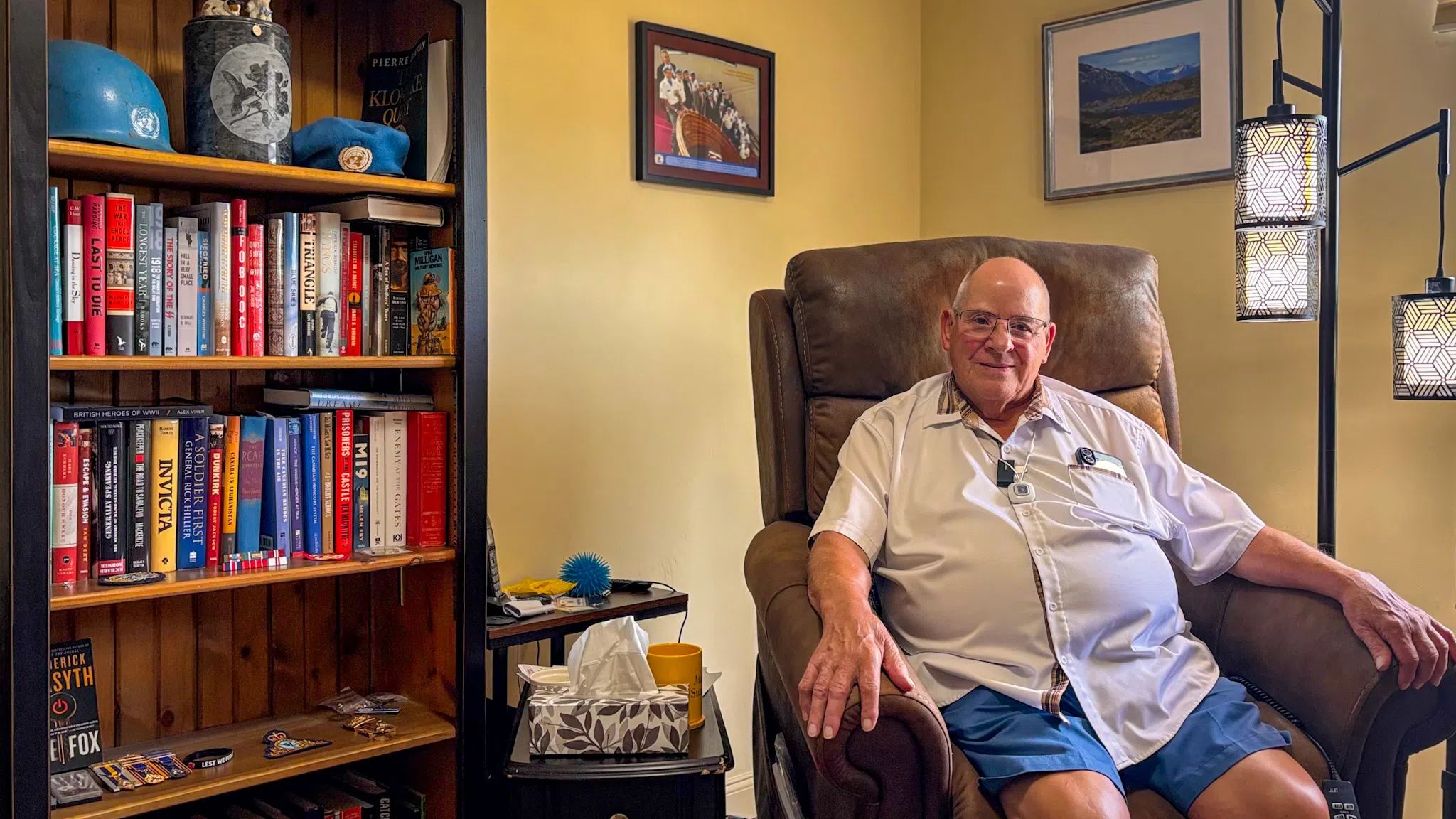
Fred LeBlanc, an 89-year-old Canadian peacekeeper, says many veterans of early UN missions remain unrecognized for their service.
LeBlanc, a former sergeant in the Royal Canadian Signal Corps from Fredericton, was deployed to the Congo in 1962 as part of a United Nations peacekeeping mission.
More than six decades later, he’s still advocating for those who wore the blue helmet.
“I joined the army in 1953,” LeBlanc said.
“When the Suez Canal crisis came in 1956, that’s when Canada started deploying peacekeepers. You’re not really a peacekeeper until you’re sent from your regular force to a UN mission.”
LeBlanc’s six-month tour in the Congo placed him in the middle of a country torn apart by tribal conflict, political instability, and violence.
“We were there to keep the peace between groups trying to take control of the country,” he said.
“We prevented some massacres while we were there. But after we left, it went right back to what it was.”
He described witnessing scenes of genocide, ethnic cleansing, and extreme poverty.
“You’d see children on the streets, malnourished, bloated, no adults around. And you couldn’t do anything to help them.”
LeBlanc served in communications, working as a cryptographer responsible for delivering sensitive messages between detachments and headquarters in Leopoldville (now Kinshasa).
He travelled across borders, including into Burundi and Rwanda, often unaware of the full scope of the conflicts unfolding around him.
Like many veterans of peacekeeping missions, LeBlanc returned home carrying invisible wounds.
PTSD wasn’t widely understood at the time, and many peacekeepers struggled in silence.
“But still, the fact is that we were peacekeepers sent there to do a job,” LeBlanc said.
“We did it with pride, and we remain peacekeepers. Forever.”

In 1997, LeBlanc and 11 other veterans founded the Blue Helmets Association, a national peacekeepers’ group.
He served as its president for 25 years. “It’s like a family,” he said. “Once you’ve been in the military, you’re always military.”
Despite the Nobel Peace Prize being awarded to UN peacekeepers in 1988, LeBlanc says Canada has done little to formally recognize those who served before that date.
“We got the Canadian Peacekeeping Service Medal, but it doesn’t distinguish between those who served before or after 1988,” he said
LeBlanc began advocating for greater recognition of peacekeepers in New Brunswick.
With support from Mary Wilson, MLA for Fredericton South and then Minister responsible for military affairs, LeBlanc helped organize a provincial recognition effort.
In 2023, 144 Canadian peacekeepers who served before 1988 received a Certificate of Reconciliation, designed by a document LeBlanc personally designed.
Presentations were held in Fredericton, Moncton, and Saint John, with additional certificates mailed to those who couldn’t attend.
LeBlanc highlighted August 9 as National Peacekeepers Day and expressed hope that more presentations and commemorations will be held around that date.
“It doesn’t matter where it comes from,” LeBlanc said. “As long as it’s from a government authority, it means something.”

Nova Scotia has since followed suit, with LeBlanc helping gather more than 200 names for recognition.
Plans are underway to present certificates in 2025, marking the 80th anniversary of the United Nations.
From 1945 to 1988, approximately 132,000 Canadians served on peacekeeping missions.
According to LeBlanc, 136 lost their lives during those missions.
“Their bodies are still overseas, buried in graves maintained by the British Commonwealth Commission,” he said. “We lost two in the Congo.”
LeBlanc hopes more Canadians will take an interest in the country’s peacekeeping history, especially missions that took place after the World Wars.
“It’d be nice if Canadians learned a little more about what happened,” he said.
“It wasn’t just about serving. It was about being deployed to countries in turmoil, where we were at risk.”
As the number of surviving veterans dwindles, LeBlanc hopes more provinces will step up to give recognition.
“I had a good life,” he said.
“I did 15 years in the military, 25 with the provincial government. But this recognition—it means something. It’s not much to ask.”


