
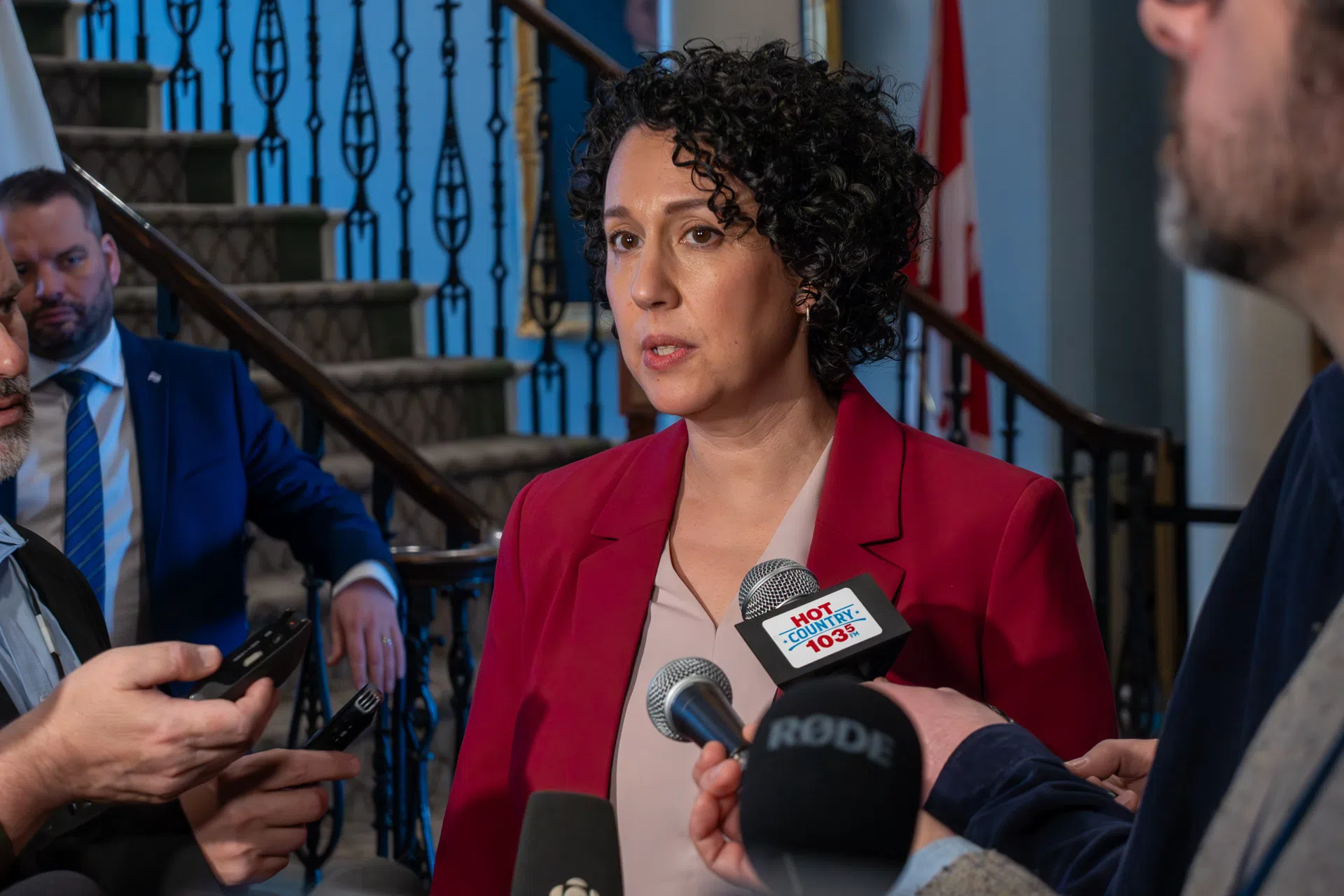
Although the opposition wanted to see more changes to new laws before they passed third reading in the legislature, NDP Leader Claudia Chender said this session was a hopeful one.
Chender said the public pushed back against laws they did not want to see in their province, some by speaking at public hearings, and some by protesting outside the building.
“They spoke out. They fought back and they forced change,” she said.
She said there was an “unprecedented level, actually, of civil engagement,” and in the last several years, she said that’s prompted the government to change course on certain issues.
Several bills were revised after they were tabled, but some were not.
Premier Tim Houston said he was proud of how the session went. He said the government is lifting a ban on fracking and exploring for uranium deposits in the province, which will boost the economy for generations.
PCs walk back some proposed changes
But the PCs also walked back several proposed changes, including one that would let them fire the province’s auditor general without cause or a significant reason. The auditor herself, Kim Adair, said her office would lose its independence if the PCs made that change, preventing her and her team from doing their jobs properly.
Originally, the government wanted to pass a law that would let them dismiss any Freedom of Information request they deem “vexatious or frivolous,” but after public backlash and consulting the privacy commissioner, the revised amendment will give the commissioner’s office the authority to decide if a freedom of information request is vexatious or frivolous.
Chender said her party did support the government’s bill to remove interprovincial trade barriers, which was revised.
Contentious bills go through
A few major changes did not get revised before passing third reading at the legislature.
The province will gain the power to fire any workers in the civil service without cause, so long as they are not in a union.
The government will also now have the power to appoint up to half of the members of a university board, and they will also link government priorities to university spending decisions.
Several university faculty members and students spoke out against the changes. Chender said those changes would threaten “academic independence” and “institutional autonomy.”
The province has argued that the university amendments would help hold schools accountable for how they spend taxpayer dollars.
Advanced Education Minister Brendan Maguire previously said he does not want to micromanage schools.
But Chender said the legislation says something else.
“We’ve heard the government at many times through this sitting and previously say, ‘Oh, I know that it looked that this bill looks bad, but don’t worry, that’s not how we’re actually going to do it,'” said Chender.
“I think that really discounts the intelligence of Nova Scotians. If something is written in a piece of legislation, it means it can be done.”



