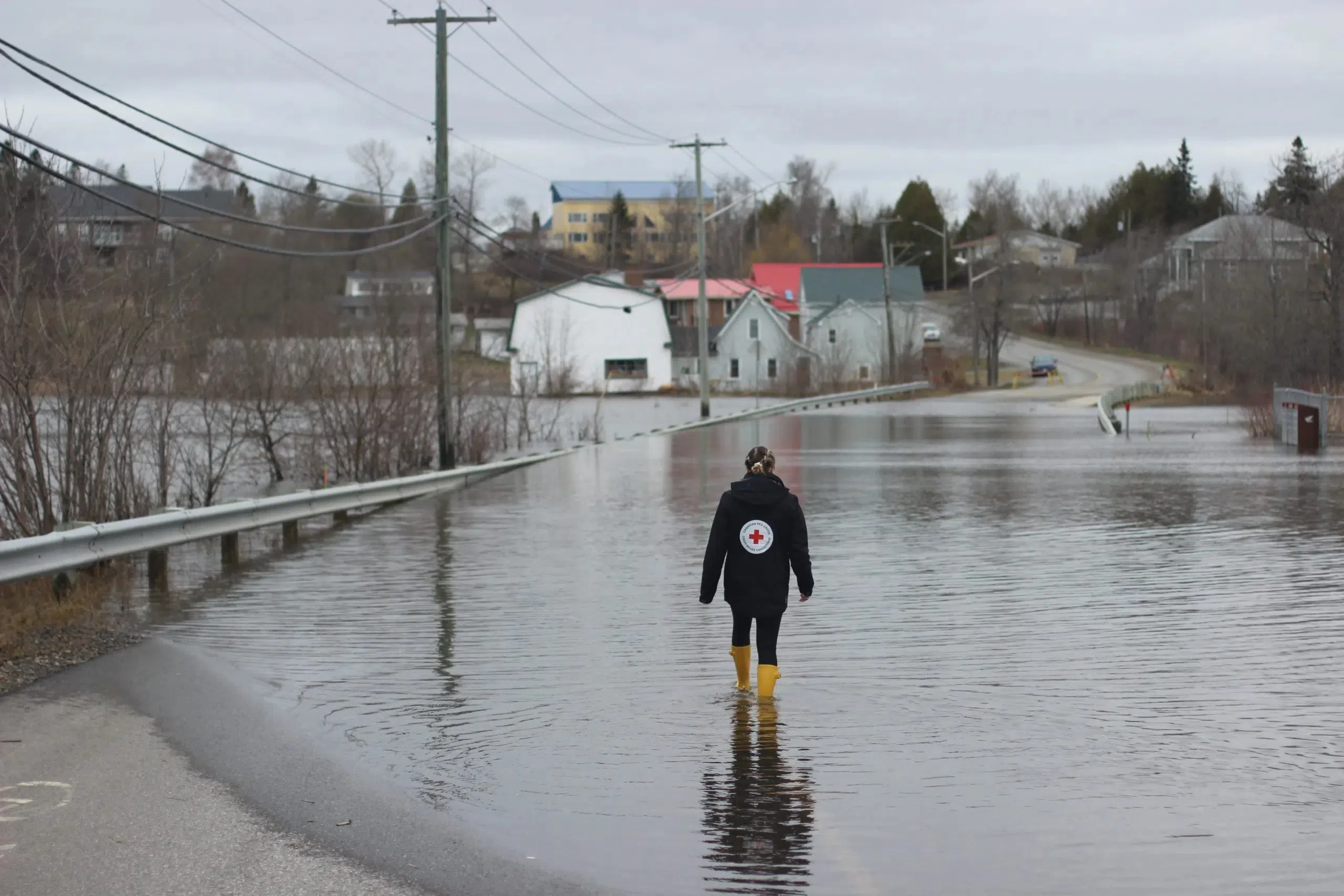
There is some optimism as we head into the annual spring freshet in New Brunswick.
The provincial government launched its annual River Watch program for the season on Tuesday.
It provides New Brunswickers with information on the status of rivers, potential ice jams and other flood issues.
Don Fox, director of air and water sciences with the Department of Environment, said snow depths are near normal for this time of the year.
Fox said the snow water equivalent — the amount of water contained in the snowpack — is about 80 per cent of what it typically is.
“It’s certainly not a bad thing, but I would just make the point that there’s enough now, if all the stars line up and all the conditions change for sudden snow melt … there’s enough that we could see problems for sure,” Fox told reporters on Tuesday.
Each morning, River Watch officials, including hydrology experts, receive a weather briefing and collect data from several sources to develop river models and forecasts, which are made available online and on the River Watch mobile site.
While it has been a few years since the province has seen significant spring flooding, officials said New Brunswickers need to be prepared for that potential.
Fox said it is hard to predict just how the season will go as conditions are highly dependent on day-to-day weather.
“Cold nights, gradual increases to the warmth through the day, those conditions, if they go for weeks and weeks, are practically perfect, with very little rain,” he said.
“The conditions we hope don’t happen are that it stays cold for a long period of time towards spring, and then when it turns warm, it turns really warm.”
Fox said that is exactly what happened in 2018 when the province saw record-breaking flooding in a number of communities along the Saint John River.
During the River Watch season, New Brunswickers are advised to:
- Be prepared for possible flooding and have a plan to evacuate and be self-sufficient for at least 72 hours.
- Move belongings to higher ground if their property is near a waterway or is in an area that is prone to flooding.
- Avoid the banks of waterways, as they become dangerous this time of year.
- Report significant ice jams or rising water. If you need advice, contact the Emergency Measures Organization at 1-800-561-4034.



